


Sodium Lauryl Ether Sulfate (SLES): Uses, Applications, Properties & Global Supply Insights
Sodium Lauryl Ether Sulfate (SLES): Applications, Uses, Supply & Global Market Insights
Few ingredients power as many everyday cleansing products as Sodium Lauryl Ether Sulfate (SLES). From shampoos and liquid soaps to industrial cleaning formulations, this widely used surfactant plays a crucial role in modern personal care and detergent manufacturing.
Known for its excellent foaming ability, detergency performance, and formulation compatibility, SLES has become one of the most commonly used surfactants across the global personal care, household cleaning, and industrial chemical markets.
As demand for hygiene, sanitation, and cleaning products continues to expand globally, Sodium Lauryl Ether Sulfate remains a critical raw material for manufacturers and formulators worldwide.
What is Sodium Lauryl Ether Sulfate (SLES)?
Sodium Lauryl Ether Sulfate (SLES) is an anionic surfactant derived from ethoxylated lauryl alcohol. It is widely used in liquid formulations due to its strong ability to remove oils, grease, dirt, and contaminants while producing stable foam.
Key Chemical Information
| Property | Details |
|---|---|
| Chemical Name | Sodium Lauryl Ether Sulfate |
| Abbreviation | SLES |
| CAS Number | 9004-82-4 |
| Chemical Type | Anionic Surfactant |
| Common Grades | SLES 28%, SLES 70% |
| Physical Form | Viscous liquid or paste |
| Solubility | Water soluble |
Due to its performance characteristics, SLES is one of the most widely used surfactants in both consumer and industrial cleaning products.
Key Properties of Sodium Lauryl Ether Sulfate
Several functional properties make SLES valuable in formulation chemistry.
High Foaming Performance
SLES generates rich and stable foam, improving cleaning efficiency and consumer perception in personal care products.
Effective Cleansing Ability
The surfactant effectively removes oil, dirt, and grease, making it suitable for both skin cleansing and industrial cleaning.
Emulsifying Capability
SLES helps disperse oils and contaminants in water, allowing them to be washed away easily.
Compatibility with Other Surfactants
SLES works well with amphoteric and nonionic surfactants, enabling balanced formulation systems.
Major Applications of Sodium Lauryl Ether Sulfate
SLES is used across several industries due to its versatility.
Personal Care Products
Sodium Lauryl Ether Sulfate is widely used in:
-
Shampoos
-
Body washes
-
Facial cleansers
-
Liquid hand soaps
-
Toothpaste formulations
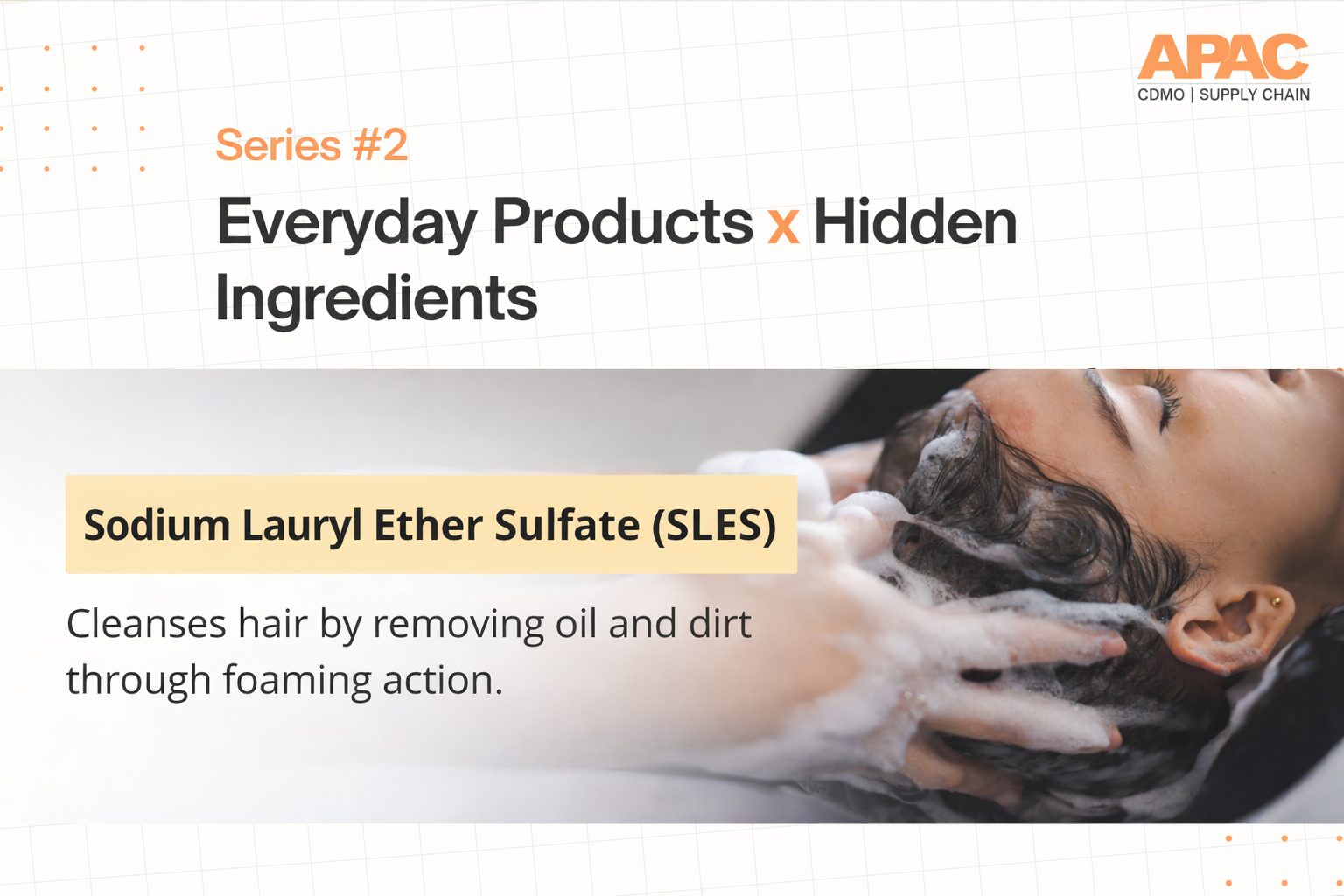
In shampoo formulations, SLES functions as the primary cleansing surfactant, helping remove sebum and product buildup from hair while generating foam.
Household Cleaning Products
SLES is commonly used in cleaning formulations such as:
-
Liquid dishwashing detergents
-
Laundry detergents
-
Surface cleaners
-
Multipurpose household cleaners
Its strong detergency allows it to break down oils and grease effectively.
Industrial Cleaning & Institutional Applications
Industrial sectors use SLES in:
-
Degreasers
-
Industrial cleaning liquids
-
Car wash shampoos
-
Institutional cleaning chemicals
These sectors require high-performance surfactants capable of removing heavy contamination.
Global Market Demand for SLES
The global surfactants market continues to expand, driven by increasing demand for hygiene, sanitation, and personal care products.
Key market drivers include:
-
Growth in personal care and cosmetic products
-
Rising demand for liquid detergent formulations
-
Expanding global cleaning product markets
-
Increasing hygiene awareness in developing economies
Because of these factors, Sodium Lauryl Ether Sulfate remains one of the most widely traded surfactants in the global chemical supply chain.
What Procurement Teams Look for When Sourcing SLES
For manufacturers and procurement professionals, sourcing Sodium Lauryl Ether Sulfate involves evaluating several factors.
Important considerations include:
-
Consistent active matter concentration
-
Reliable supplier manufacturing standards
-
Availability of documentation (COA, SDS, TDS)
-
Stable supply chain and logistics support
-
Competitive global pricing
Maintaining reliable sourcing partners helps ensure consistent production and supply continuity.
Packaging & Supply Options
SLES is commonly supplied in several packaging formats depending on shipment requirements.
Typical packaging includes:
-
HDPE drums
-
IBC containers
-
Bulk tanker loads
The most commonly traded commercial grades are:
-
SLES 28%
-
SLES 70% https://apacss.com/sodium1laureth1sulfate1-sles-70-1technical1grade-1drum-2025-113.html
These grades are widely used in personal care and detergent formulations.
Related Surfactants Used in Formulations
Formulators working with SLES often combine it with other surfactants to optimize performance.
Common complementary surfactants include:
-
Cocamidopropyl Betaine (CAPB)
-
Linear Alkyl Benzene Sulfonic Acid (LABSA)
-
Alpha Olefin Sulfonate (AOS)
-
Nonionic Surfactants
These combinations help create balanced cleansing systems with improved mildness and foam stability.
APAC’s Role in Global SLES Supply
At APAC Sourcing Solutions, we connect global buyers with reliable manufacturers of surfactants and specialty chemicals, including Sodium Lauryl Ether Sulfate.
Our sourcing approach focuses on:
-
Verified global manufacturers
-
Quality documentation readiness (COA | SDS | TDS)
-
Supply support for regulated markets
-
Efficient international logistics coordination
This helps customers maintain stable access to high-quality chemical ingredients across global markets.
Frequently Asked Questions (FAQ)
What is Sodium Lauryl Ether Sulfate used for?
SLES is widely used in shampoos, liquid soaps, dishwashing liquids, detergents, and industrial cleaning formulations due to its foaming and cleansing properties.
What is the difference between SLS and SLES?
SLES is ethoxylated and generally milder, while Sodium Lauryl Sulfate (SLS) can be more aggressive as a surfactant.
Is SLES safe in personal care products?
SLES is widely used in regulated concentrations in personal care products and cleaning formulations worldwide.
Which industries use SLES?
Industries that use SLES include:
-
Personal care
-
Household cleaning
-
Detergent manufacturing
-
Industrial cleaning
-
Institutional cleaning products
Conclusion
Although rarely noticed by end consumers, Sodium Lauryl Ether Sulfate plays a fundamental role in modern cleansing formulations. Its strong detergency, excellent foaming ability, and compatibility with other surfactants make it one of the most widely used surfactants globally.
As demand for cleaning and hygiene products continues to grow, SLES will remain an essential ingredient supporting formulation performance across multiple industries.
Learn more: https://apacss.com
Inquiry: ibd@apacss.com


