


Lactic Acid: Complete Sourcing, Grades & Applications Guide | APAC Supply Chain
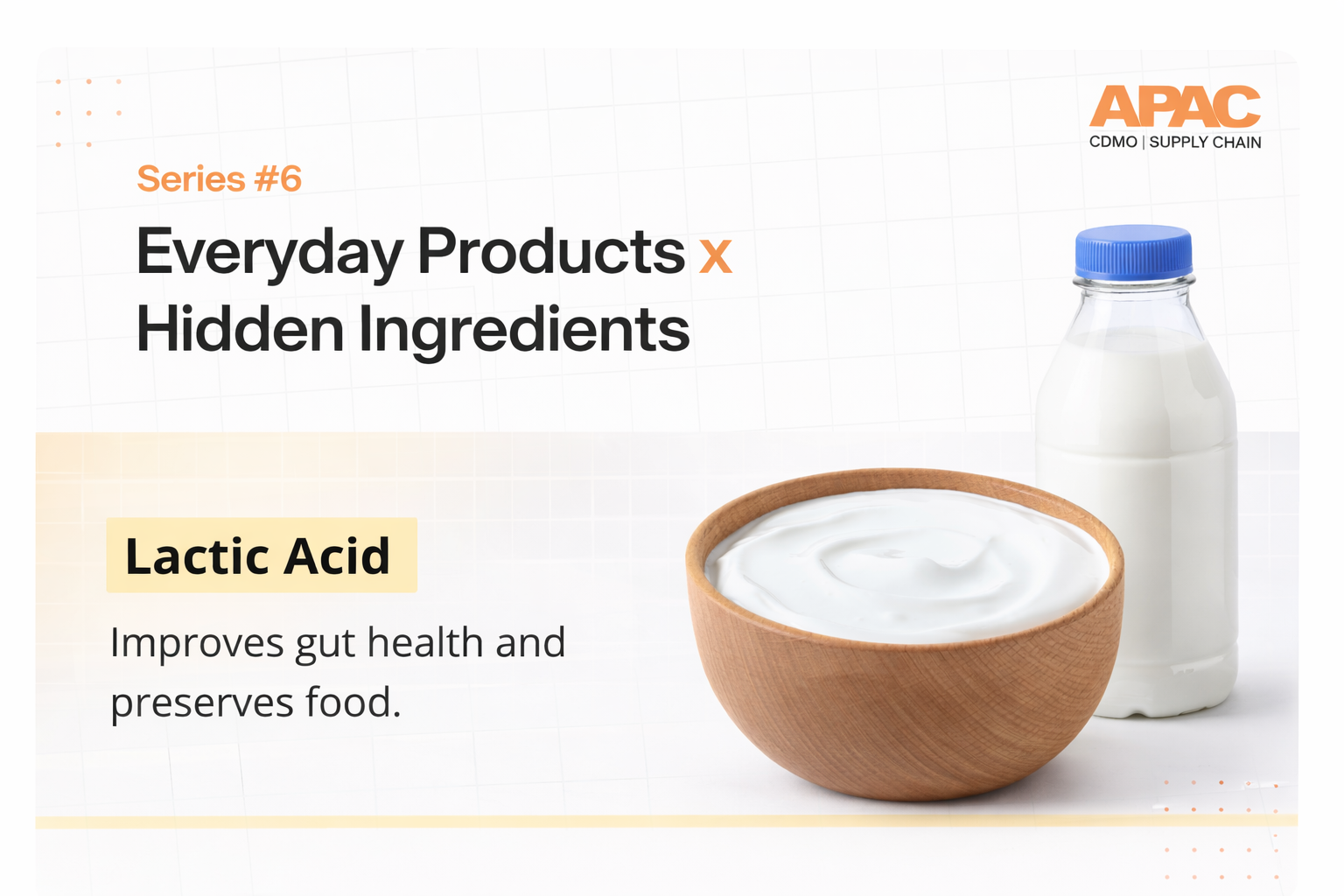
APAC Supply Chain | CDMO · Series: Everyday Products × Hidden Ingredients · April 2026
Reading time: ~9 minutes · Category: Ingredients & Raw Materials · SEO: Lactic Acid / Lactic Acid Supplier India
Lactic Acid: The Hidden Ingredient That Preserves Your Food, Heals Your Skin, and Powers Modern Pharma — Complete Sourcing Guide
Meta Description: Lactic Acid is one of the most widely used organic acids in pharmaceutical excipients, food preservation, cosmetic formulation, and biodegradable polymer manufacturing. Discover its chemistry, commercial grades, applications, global supply chain dynamics, and why procurement teams across Asia trust APAC Supply Chain for bulk Lactic Acid sourcing.
Every time you eat a bowl of yoghurt, apply a skin-brightening serum, swallow a slow-release tablet, or open a pack of vacuum-sealed deli meat — there is a very strong chance that lactic acid is doing the quiet, essential work behind the scenes.
Lactic Acid (2-hydroxypropanoic acid) is a naturally occurring organic acid produced through the fermentation of carbohydrates. It is one of the oldest and most commercially significant biochemicals in the world, serving simultaneously as a food preservative, pH regulator, flavour enhancer, pharmaceutical excipient, cosmetic active, and the building block of polylactic acid (PLA) — the world's leading biodegradable bioplastic.
In this complete sourcing guide, we break down everything procurement managers, R&D formulators, and supply chain professionals need to know about Lactic Acid: its chemistry, commercial grades, key applications, global market dynamics, and how to source it reliably at scale.
Table of Contents
- What Is Lactic Acid?
- Chemical Properties & Commercial Grades
- How Lactic Acid Works: Key Functional Mechanisms
- Industrial & Commercial Applications
- How Lactic Acid Is Manufactured
- Global Market & Supply Chain Overview
- How to Source Lactic Acid: What Buyers Need to Know
- Why APAC Supply Chain & CDMO for Lactic Acid Procurement
- Frequently Asked Questions (FAQ)
- Conclusion
1. What Is Lactic Acid?
Lactic Acid is a naturally occurring alpha-hydroxy acid (AHA) produced when microorganisms ferment sugars such as glucose, sucrose, or lactose in the absence of oxygen. It occurs naturally in fermented foods — yoghurt, cheese, sauerkraut, kimchi, and sourdough bread — and is also produced endogenously in the human body during anaerobic muscular activity.
Commercially, Lactic Acid is produced at industrial scale via controlled microbial fermentation of carbohydrate feedstocks (corn starch, sugarcane molasses, cassava), making it cost-effective, scalable, and — uniquely among major industrial acids — fully bio-based. It is typically sold as an aqueous solution at 80% or 88% concentration, or in anhydrous form for specialised applications.
What makes Lactic Acid commercially indispensable across so many industries is its extraordinary multi-functionality: it preserves food by lowering pH, exfoliates and brightens skin as a cosmetic active, acidifies and buffers pharmaceutical formulations, produces biodegradable PLA polymers, and improves gut health through probiotic fermentation — all from one simple organic acid molecule.
Key fact: Lactic Acid is listed as a GRAS (Generally Recognized As Safe) substance by the US FDA and is approved under EU food additive regulations as E270. It holds monograph status in USP, BP, EP, and IP — making it one of the most universally accepted organic acids in global pharmaceutical and food manufacturing. It is also the monomer feedstock for polylactic acid (PLA), the world's most widely produced biodegradable bioplastic.
2. Chemical Properties & Commercial Grades
Basic Chemistry
- IUPAC Name: 2-Hydroxypropanoic acid
- Also Known As: Milk acid, 2-hydroxypropanoic acid, DL-Lactic Acid, L-Lactic Acid
- CAS Number: 50-21-5 (DL); 79-33-4 (L); 10326-41-7 (D)
- Molecular Formula: C₃H₆O₃
- Molecular Weight: 90.08 g/mol
- Appearance: Colourless to slightly yellow viscous liquid (solution); white crystalline solid (anhydrous)
- Odour: Mild, slightly acidic
- Taste: Sour, acidic
- Solubility: Miscible with water in all proportions; soluble in ethanol and acetone
- pKa: 3.86 — making it a stronger acid than acetic acid (pKa 4.76), with excellent pH buffering capacity
- Chiral Forms: Exists as two enantiomers — L-(+)-Lactic Acid (natural, produced by most bacteria and the human body) and D-(-)-Lactic Acid, plus the racemic DL mixture
- Hygroscopicity: Highly hygroscopic — requires sealed, moisture-controlled storage
- Boiling Point: 122°C (at 15 mmHg); decomposes above 120°C at atmospheric pressure
Commercial Grades
- Pharmaceutical Grade (USP / BP / EP / IP): Highest purity (>88% assay), full pharmacopoeial compliance, batch CoA, heavy metal testing, microbial limits, residual solvent testing. Required for oral liquid formulations, topical preparations, vaginal products, and parenteral pH adjustment.
- Food Grade (FCC / E270): Compliant with Food Chemicals Codex and EU E270 designation. Must meet specific heavy metal, arsenic, and microbial purity standards. Used as a preservative, acidulant, and flavour enhancer across beverages, dairy, bakery, and meat products.
- Cosmetic / Personal Care Grade: High purity with low colour and controlled microbiological limits. Suitable for AHA exfoliant formulations, skin-brightening serums, pH-adjusting agents, and hair care applications. Must comply with ISO 16128 and regional cosmetic frameworks.
- Technical / Industrial Grade: Lower purity acceptable for PLA biopolymer production, textile processing, leather tanning, and industrial pH regulation. Cost-optimised for large-volume applications where pharmacopoeial compliance is not required.
- L-(+)-Lactic Acid (Optically Pure): The biologically natural form, produced exclusively by bacterial fermentation. Required for pharmaceutical applications and PLA polymer synthesis, where optical purity (enantiomeric excess >99%) directly impacts product performance.
- DL-Lactic Acid (Racemic): The synthetic or mixed-fermentation form. More economical; used in food, industrial, and certain cosmetic applications where optical specificity is not required.
Procurement tip: Always specify the optical form required — L-(+), D-(-), or DL (racemic) — at the RFQ stage. For pharmaceutical oral and topical applications, L-(+)-Lactic Acid (USP/BP grade) is standard. For PLA polymer manufacturing, high optical purity L-(+) is non-negotiable as stereochemical impurity directly impacts polymer crystallinity and mechanical properties. Using a DL-grade where L-grade is specified is one of the most common and costly procurement errors in this category.
3. How Lactic Acid Works: Key Functional Mechanisms
Lactic Acid's versatility across industries stems from several distinct physicochemical properties that activate different functions depending on the application context:
pH Reduction & Buffering
With a pKa of 3.86, Lactic Acid is an effective, food-safe acidulant. It lowers pH rapidly in food and beverage systems to create an environment hostile to pathogenic bacteria, extending shelf life and food safety. In pharmaceutical formulations, it serves as a pH adjuster and buffer in oral liquids, topical gels, and parenteral solutions — maintaining product stability and optimising active ingredient solubility across storage lifecycles.
Antimicrobial Preservation
The undissociated form of Lactic Acid (at low pH) penetrates microbial cell membranes and disrupts intracellular metabolism, providing bacteriostatic and fungistatic activity. This natural preservative mechanism is the basis of lactic acid fermentation — the world's oldest food preservation technology — and is why lactobacillus-fermented foods like yoghurt, kimchi, and sauerkraut have multi-week shelf lives without refrigeration or synthetic preservatives.
Keratolytic Exfoliation (Cosmetics)
As an alpha-hydroxy acid (AHA), Lactic Acid disrupts the ionic bonds holding corneocytes (dead skin cells) together in the stratum corneum, promoting cell turnover, improving skin texture, and reducing the appearance of hyperpigmentation, fine lines, and uneven tone. Of all the AHAs, Lactic Acid is uniquely valued for its larger molecular size — it penetrates less deeply than glycolic acid, making it better tolerated on sensitive and darker skin types while still delivering clinically meaningful exfoliation.
Natural Moisturisation Factor (NMF) Component
Lactic Acid (as sodium lactate, its salt) is a key component of the skin's Natural Moisturisation Factor — the complex of hygroscopic substances in the stratum corneum that maintain skin hydration. It attracts and binds water to the skin surface, functioning as a humectant while simultaneously supporting barrier function. This dual exfoliant-plus-humectant profile is why Lactic Acid features prominently in premium moisturisers and body lotions.
Biodegradable Polymer Synthesis (PLA)
High-purity L-(+)-Lactic Acid is the direct chemical precursor to polylactic acid (PLA), produced through ring-opening polymerisation of the lactide dimer. PLA is the world's most commercially important bioplastic — used in food packaging, medical devices, surgical sutures, drug delivery systems, and 3D printing filaments. The global shift toward sustainable packaging is driving exponential growth in PLA demand, which in turn is the single largest growth driver for the lactic acid market today.
4. Industrial & Commercial Applications
Pharmaceutical Manufacturing
Lactic Acid is a versatile pharmaceutical excipient and active ingredient. Key pharmaceutical applications include:
- pH adjustment in oral liquid formulations: Syrups, solutions, and suspensions — used to optimise active ingredient stability and palatability
- Parenteral pH adjustment: Sterile-grade lactic acid is used in IV solutions (e.g., Ringer's Lactate / Hartmann's Solution) — one of the world's most widely administered intravenous fluid formulations
- Topical pharmaceutical formulations: Gels, creams, and ointments for dermatological conditions including ichthyosis, hyperkeratosis, and acne — used as both active ingredient and vehicle pH adjuster
- Vaginal pH restoration products: The vaginal microbiome is naturally lactobacillus-dominated and maintained at pH 3.8–4.5 by lactic acid production. Pharmaceutical vaginal gels, pessaries, and intimate washes use lactic acid to restore normal acidity disrupted by bacterial vaginosis or antibiotic use
- Biodegradable drug delivery systems: PLA and PLGA (polylactic-co-glycolic acid) microspheres and implants are used for controlled-release drug delivery of peptides, proteins, and small molecules — with lactic acid as the polymer building block
- Calcium lactate / sodium lactate production: Lactic acid salts are used as mineral supplements, electrolyte replenishers, and pharmaceutical excipients in their own right
Food & Beverage Industry
Lactic Acid (E270) is authorised across all major food regulatory frameworks globally. Applications include:
- Dairy & fermented foods: The defining flavour acid of yoghurt, cheese, and cultured butter; also used to standardise acidity in dairy processing
- Meat & poultry processing: Surface antimicrobial treatment on carcasses and processed meat to reduce Listeria, Salmonella, and E. coli contamination; extends shelf life of chilled and packaged meats
- Beverages: Acidity regulator and flavour modifier in soft drinks, sports drinks, and functional beverages; provides a smoother, less sharp acidity profile than citric or phosphoric acid
- Baked goods: Dough conditioner, yeast nutrient, and mould inhibitor in bread and bakery products; improves crumb structure and extends shelf life
- Confectionery & hard candies: pH reduction and flavour enhancer; provides clean sour note in hard candies, gummies, and fruit chews
- Pickled & canned vegetables: Preservation acidulant in shelf-stable vegetable products; preferred over acetic acid for milder flavour profile
Personal Care & Cosmetics
- AHA exfoliant formulations: Chemical peels, exfoliating serums, and toners — typically at 5–12% concentration for leave-on products; up to 30–70% in professional clinic peels
- Anti-ageing & brightening serums: Stimulates collagen synthesis and cell turnover; clinically proven to reduce fine lines, hyperpigmentation, and age spots with regular use
- Body lotions & moisturisers: At low concentrations (2–5%), lactic acid functions primarily as a humectant and NMF component rather than an exfoliant — suitable for daily moisturisation
- Intimate hygiene & feminine care: pH-balancing washes, gels, and wipes formulated to support healthy vaginal microbiome; one of the fastest-growing segments in personal care
- Hair care: pH adjuster in conditioners and hair masks; smooths the cuticle and improves shine by maintaining optimal hair shaft pH (4.5–5.5)
- Nail care: Cuticle softeners and nail conditioning formulations
Industrial & Biopolymer Applications
- Polylactic Acid (PLA) bioplastics: The single largest and fastest-growing end market for lactic acid globally. PLA packaging, films, cups, cutlery, and agricultural mulch film are rapidly displacing petroleum-based plastics under global sustainability mandates
- Textile & leather processing: Deliming agent in leather tanning (replacing sulfuric acid); pH regulation in textile dyeing and finishing
- Cleaning & descaling agents: Biodegradable acid cleaner for industrial equipment, dairy processing lines, and household descalers — preferred green alternative to phosphoric and hydrochloric acid
- Solvent production: Feedstock for ethyl lactate, a high-performance green solvent used in electronics cleaning, coatings, and pharmaceutical processing
Did you know? Ringer's Lactate Solution — a sterile IV fluid containing sodium lactate as a buffer — is one of the most widely administered fluids in global healthcare, used in surgery, trauma, burn treatment, and dehydration management. Millions of litres are produced and consumed every year, making pharmaceutical-grade lactic acid a genuinely critical ingredient in frontline medical care.
5. How Lactic Acid Is Manufactured
Commercial lactic acid production follows a well-established biotechnological fermentation process, and understanding it is directly relevant to buyers evaluating supply chain resilience, feedstock risk, and quality consistency.
Step 1 — Feedstock Preparation
The process begins with a carbohydrate feedstock — most commonly corn starch (hydrolysed to glucose syrup), sugarcane or beet molasses (direct sucrose source), or cassava starch in Southeast Asian production. The feedstock is sterilised, clarified, and adjusted to the optimal nutrient composition for bacterial fermentation. Feedstock choice directly impacts the final product's quality, colour, and impurity profile — and varies significantly by production region and manufacturer.
Step 2 — Microbial Fermentation
Lactic acid bacteria (LAB) — primarily Lactobacillus species such as L. delbrueckii, L. lactis, and L. helveticus — are inoculated into the prepared fermentation medium. Under anaerobic or microaerobic conditions at 40–45°C, these bacteria convert sugars to lactic acid through homofermentative or heterofermentative pathways. The fermentation is neutralised continuously with calcium carbonate or ammonia to maintain optimal pH (5.5–6.5) and maximise bacterial yield. Batch fermentation cycles typically run for 24–72 hours.
Step 3 — Acidification & Calcium Lactate Removal
When calcium carbonate is used as the neutralising agent, the fermentation broth contains calcium lactate rather than free lactic acid. Sulfuric acid is added to acidify the broth, liberating free lactic acid and precipitating calcium sulfate (gypsum) as a by-product. Calcium sulfate is filtered off — this gypsum by-product is a known environmental concern with the traditional calcium salt process, driving industry interest in alternative fermentation and recovery technologies.
Step 4 — Purification & Concentration
The crude lactic acid solution undergoes activated carbon treatment (decolourisation), ion exchange chromatography (demineralisation and purification), membrane filtration, and multi-stage evaporation to reach the commercial concentration of 80% or 88%. For pharmaceutical and high-purity cosmetic grades, additional purification steps — including esterification-hydrolysis or electrodialysis — may be employed to achieve pharmacopoeial purity levels and low colour specification.
Supply chain implication: Because lactic acid is derived from agricultural carbohydrate feedstocks (corn, sugarcane, cassava), its pricing is correlated with global sugar and corn commodity markets. Buyers in India, Southeast Asia, and the Middle East should monitor regional sugar prices and CBOT corn futures when planning annual lactic acid procurement contracts. Seasonal feedstock price fluctuations of 10–20% are not uncommon, and production can be geographically concentrated — making dual-sourcing across India and China a sensible procurement risk-management strategy.
6. Global Market & Supply Chain Overview
Market Size & Growth
The global lactic acid market was valued at approximately USD 1.3–1.5 billion in 2024 and is projected to grow at a CAGR of 7.5–9.0% through 2030, making it one of the fastest-growing organic acid markets globally. The primary growth driver is PLA bioplastic manufacturing — driven by global single-use plastic legislation, brand sustainability commitments, and rapidly falling PLA production costs. Secondary growth drivers include expanding pharmaceutical generic manufacturing in Asia, growing demand for clean-label food preservation, and the booming AHA skincare segment.
Asia-Pacific dominates both production and consumption — accounting for over 55–60% of global lactic acid output. China is the largest global producer, followed by the Netherlands (Corbion), the USA, and India. India is simultaneously a major consuming market for pharmaceutical and food-grade lactic acid, driven by its position as the world's largest generic pharmaceutical manufacturer and its fast-growing FMCG sector.
Key Global Producers
- Corbion (Netherlands): The world's leading lactic acid producer; operates globally with production in the Netherlands, Spain, Thailand, and Brazil. Supplies pharmaceutical, food, and PLA-grade lactic acid under the PURAC® brand.
- Galactic (Belgium): Major European producer of high-purity lactic acid for food, pharma, and cosmetic applications; strong in European and Middle Eastern markets.
- Henan Jindan Lactic Acid Technology (China): One of the world's largest lactic acid manufacturers by volume; supplies food and industrial grades at scale for Asia-Pacific markets.
- Musashino Chemical Laboratory (Japan): Specialist producer of high optical purity L-(+)-Lactic Acid for pharmaceutical and PLA applications.
- Vaishnavi Bio Organics (India): Leading domestic Indian lactic acid producer supplying food, pharma, and cosmetic grades.
- NatureWorks LLC (USA/Thailand): The world's largest PLA producer, with a direct stake in the lactic acid supply chain for biopolymer applications.
Regional Supply Chain Dynamics
- India: Major consuming market for pharmaceutical-grade lactic acid (USP/BP) driven by the generic formulation industry; food-grade demand growing rapidly in dairy, meat processing, and beverages. Domestic production is present but high-specification pharma grades rely significantly on imports from China and Europe. Key ports: JNPT (Mumbai), Mundra, Chennai.
- Southeast Asia: Thailand is a key production hub (Corbion's largest Asian facility); Vietnam, Indonesia, and Malaysia are significant importers for food processing and personal care manufacturing. Regional PLA packaging demand is growing rapidly under plastic regulation.
- Middle East & Africa: Import-dependent markets; sourcing primarily from India, China, and Europe. Growing pharmaceutical manufacturing in Saudi Arabia, UAE, and Egypt driving pharmaceutical-grade demand. Food-grade demand strong in Turkey, Egypt, and GCC beverage markets.
- Europe: Premium pharmaceutical-grade market; CEP and EDMF documentation are mandatory for excipient supply. Corbion and Galactic are the dominant regional suppliers for pharma and cosmetic applications.
7. How to Source Lactic Acid: What Buyers Need to Know
Define Your Grade, Optical Form & Concentration Before You Quote
The most common sourcing mistake with lactic acid is submitting an RFQ without specifying three critical parameters: (1) the required grade — pharmaceutical (USP/BP/EP), food (FCC/E270), cosmetic, or industrial; (2) the optical form — L-(+), D-(-), or DL; and (3) the concentration — 80% or 88% solution, or anhydrous. These specifications determine the supplier pool, testing requirements, documentation package, and price — sometimes by a factor of 2–3x between the lowest and highest specification. Always define all three before requesting quotes.
Key Documentation to Request from Suppliers
- Certificate of Analysis (CoA) — batch-specific, not generic
- Certificate of Origin (CoO)
- Safety Data Sheet (SDS / MSDS)
- Technical Data Sheet (TDS)
- Optical rotation / enantiomeric purity test report (for L-grade or PLA applications)
- Heavy metal / elemental impurity report (ICH Q3D for pharma use; especially iron, lead, arsenic)
- Allergen & GMO declaration (especially important for corn/sugarcane-derived lactic acid in food and pharma)
- Halal / Kosher certification (where required — note: lactic acid derived from dairy lactose requires separate certification status)
- Drug Master File (DMF) reference or CEP (for pharmaceutical API excipient supply to regulated markets)
- Fermentation feedstock declaration (for vegan / vegetarian compliance)
- GMP compliance certificate or supplier audit report
Packaging & Logistics Considerations
Lactic acid solution (80–88%) is typically supplied in 25 kg or 35 kg HDPE jerry cans for small buyers, 200 kg HDPE drums for mid-volume orders, and 1,000 kg IBC totes or ISO tank containers for bulk industrial and PLA-grade shipments. Given lactic acid's hygroscopicity and mildly corrosive nature, HDPE is the standard packaging material — stainless steel is suitable for large tanks and process equipment. Avoid prolonged contact with carbon steel. Storage in cool, dry, well-ventilated areas away from direct sunlight is critical to prevent colour development and ester formation in the solution over time.
Pricing Benchmarks & MOQ Guidance
- Food Grade Lactic Acid 80% (E270, DL or L): USD 600–900/MT (China/India origin, FOB) — subject to corn and sugar feedstock market fluctuations
- Pharmaceutical Grade Lactic Acid 88% L-(+) (USP/BP/EP): USD 1,400–2,200/MT — premium for optical purity, pharmacopoeial compliance, and documentation
- Cosmetic Grade Lactic Acid (high purity, low colour): USD 900–1,400/MT depending on specification and origin
- PLA-grade / High Optical Purity L-Lactic Acid: USD 1,200–1,800/MT — reflects additional purification and optical purity verification cost
- MOQ: Typically 50–100 kg for samples; 1 MT for trial orders; 5–20 MT for standard commercial orders; 50 MT+ for annual contract pricing
Buyer alert: Lactic acid pricing is quoted at different concentrations by different suppliers — 80% and 88% are both standard commercial grades, but represent meaningfully different active content. Always normalise price comparisons to a per-tonne of 100% lactic acid equivalent basis before comparing quotes. A seemingly cheaper 80% product may be significantly more expensive on an active-content basis than an 88% product at a slightly higher headline price.
8. Why APAC Supply Chain & CDMO for Lactic Acid Procurement
At APAC Supply Chain | CDMO, we understand that lactic acid procurement is not a commodity transaction — it is a formulation-critical or production-critical decision with direct implications for product quality, regulatory compliance, and manufacturing continuity.
Our sourcing team works with qualified, audited suppliers across India, China, and Southeast Asia to provide pharmaceutical, food, cosmetic, and industrial grade lactic acid with the documentation integrity that modern manufacturing demands. Here's what differentiates our approach:
- Grade & Optical-Form-Specific Sourcing: We don't offer a one-size-fits-all solution. We work with your formulation or production team to identify the exact specification — optical form (L/DL), concentration (80%/88%), pharmacopoeial standard (USP/BP/EP/FCC), and application-specific requirements — and source accordingly from the right supplier for your use case.
- Full Documentation Package: Every shipment includes batch CoA, CoO, SDS, TDS, optical rotation report, and application-specific compliance certificates. For pharmaceutical customers, we support DMF referencing and CEP sourcing from qualified manufacturers.
- Regulatory Coverage — HCR & LCR Markets: Whether you're formulating for US/EU/Japanese markets (High Cost Regions) or for India/SEA/MEA markets (Low Cost Regions), we understand the regulatory requirements at each market level and source the right grade of lactic acid accordingly. One procurement partner for every market.
- ISO 9001:2015 & EcoVadis Committed: Our quality management system and sustainability accountability are third-party validated — giving your quality and compliance teams the confidence to on-board us rapidly without extended supplier qualification timelines.
- Competitive Pricing with Transparent Costing: We provide pricing on a normalised active-content basis (per tonne of 100% lactic acid equivalent), with transparent logistics and documentation cost breakdowns. No hidden charges, no ambiguous concentration basis comparisons.
- Rapid Qualification Support: Need to qualify a new lactic acid supplier urgently — due to a supply disruption, a new market launch, or a regulatory upgrade requirement? Our team can mobilise samples, documentation, and supplier audit coordination within days, not months.
9. Frequently Asked Questions (FAQ)
What is the difference between L-Lactic Acid and DL-Lactic Acid?
L-(+)-Lactic Acid is the naturally occurring, optically active enantiomer — produced exclusively by bacterial fermentation and recognised by human metabolic pathways. It is the standard for pharmaceutical, food, and high-performance cosmetic applications, and the required feedstock for PLA polymer production where optical purity determines crystallinity and mechanical properties. DL-Lactic Acid is a racemic mixture of equal parts L- and D-enantiomers, typically produced by chemical synthesis or mixed fermentation. It is suitable for industrial, general food processing, and lower-specification cosmetic applications. The price premium for L-(+) over DL is typically 20–40% depending on purity grade and application requirements.
Is lactic acid vegan and halal-friendly?
Commercial lactic acid produced from corn starch, sugarcane, or cassava feedstocks is vegan and suitable for halal formulation, provided the fermentation microorganisms used are not of animal origin. However, lactic acid derived from dairy lactose (less common commercially but still produced) is not vegan and may have different halal status depending on the specific fermentation process. It is essential to request a fermentation feedstock declaration from your supplier — particularly for pharmaceutical, food, and personal care formulations where vegan, halal, or kosher labelling is required. Do not assume all lactic acid is plant-derived without written supplier confirmation.
What pharmacopoeial standards cover lactic acid?
Lactic Acid holds official monograph status in all major global pharmacopoeias: USP-NF (United States Pharmacopeia), BP (British Pharmacopoeia), EP (European Pharmacopoeia), IP (Indian Pharmacopoeia), and JP (Japanese Pharmacopoeia). Food-grade compliance is governed by FCC (Food Chemicals Codex) and EU Regulation EC No 1333/2008 (E270). Each monograph specifies assay limits, optical rotation, heavy metal limits, and other quality parameters — and these differ between pharmacopoeias, so always confirm which standard is required for your target market before placing orders.
Can lactic acid be used in parenteral (injectable) formulations?
Yes — lactic acid and its salts (particularly sodium lactate) are used extensively in parenteral formulations, most notably Ringer's Lactate (Hartmann's Solution), which is one of the most widely used intravenous fluid formulations globally. For parenteral applications, suppliers must provide elemental impurity data in full compliance with ICH Q3D guidelines, with particular attention to iron, lead, arsenic, and residual catalyst metals from the fermentation and purification processes. The permitted daily exposure (PDE) limits for parenterals are significantly more stringent than for oral products. Buyers sourcing lactic acid for parenteral applications should explicitly request ICH Q3D-compliant elemental impurity reports and should only use suppliers with documented sterile-grade or parenteral-grade manufacturing controls and regulatory history.
What percentage of lactic acid should I use in cosmetic formulations?
Usage concentration depends heavily on the intended function and final product pH. As a gentle daily exfoliant in leave-on serums and moisturisers, 2–5% at pH 3.5–4.0 is typical. For more active AHA products targeting cell turnover and anti-ageing, 8–12% at pH 3.5–4.5 is standard. Professional salon peels use 20–50% at lower pH for short contact time treatments. Regulatory limits vary: the EU Cosmetic Regulation requires AHA-containing leave-on products above 0.5% to carry specific usage warnings on packaging. Always formulate within regulatory guidelines for your target market and conduct HRIPT (Human Repeat Insult Patch Test) safety testing for novel AHA formulations.
How do I get a sample or quotation for Lactic Acid from APAC Supply Chain?
You can request product specifications, batch CoA, and samples by emailing our team at ecomm@apacss.com. We supply pharmaceutical (USP/BP/EP), food (FCC/E270), cosmetic, and industrial grade Lactic Acid in 80% and 88% solution concentrations, sourced from qualified manufacturers across India, China, and Southeast Asia. Please specify your required grade, optical form (L or DL), target application, and annual volume estimate when enquiring — this allows us to recommend the optimal supplier and provide a meaningful commercial proposal. Minimum order quantities, pricing, lead times, and documentation packages are available on request.
10. Conclusion
Lactic acid is one of those quietly ubiquitous ingredients that most people encounter multiple times every day — in their yoghurt, their skincare serum, their IV drip, their food packaging — without ever knowing it's there. Yet for formulation chemists, pharmaceutical procurement managers, FMCG supply chain professionals, and sustainability-driven packaging buyers, lactic acid is a cornerstone ingredient whose reliable supply and correct specification are non-negotiable.
The complexity of sourcing lactic acid correctly — choosing the right optical form, verifying pharmacopoeial compliance, managing feedstock-linked price volatility, navigating multi-market regulatory requirements, and ensuring vegan/halal documentation integrity — is exactly the kind of challenge that demands a procurement partner with deep category expertise, not just a commodity trader with a price list.
At APAC Supply Chain | CDMO, we combine deep supplier relationships across Asia with rigorous quality management (ISO 9001:2015) and sustainability accountability (EcoVadis Committed) to give buyers across India, Southeast Asia, and the Middle East a procurement partner they can rely on for critical excipient and ingredient categories like Lactic Acid.
If you are reviewing your Lactic Acid sourcing strategy — whether you're qualifying a new supplier, expanding to a new market, upgrading to a higher-purity pharmaceutical grade, or managing a documentation gap — we'd welcome the conversation. Reach out at ecomm@apacss.com or explore our full ingredient portfolio at www.apacss.com.


